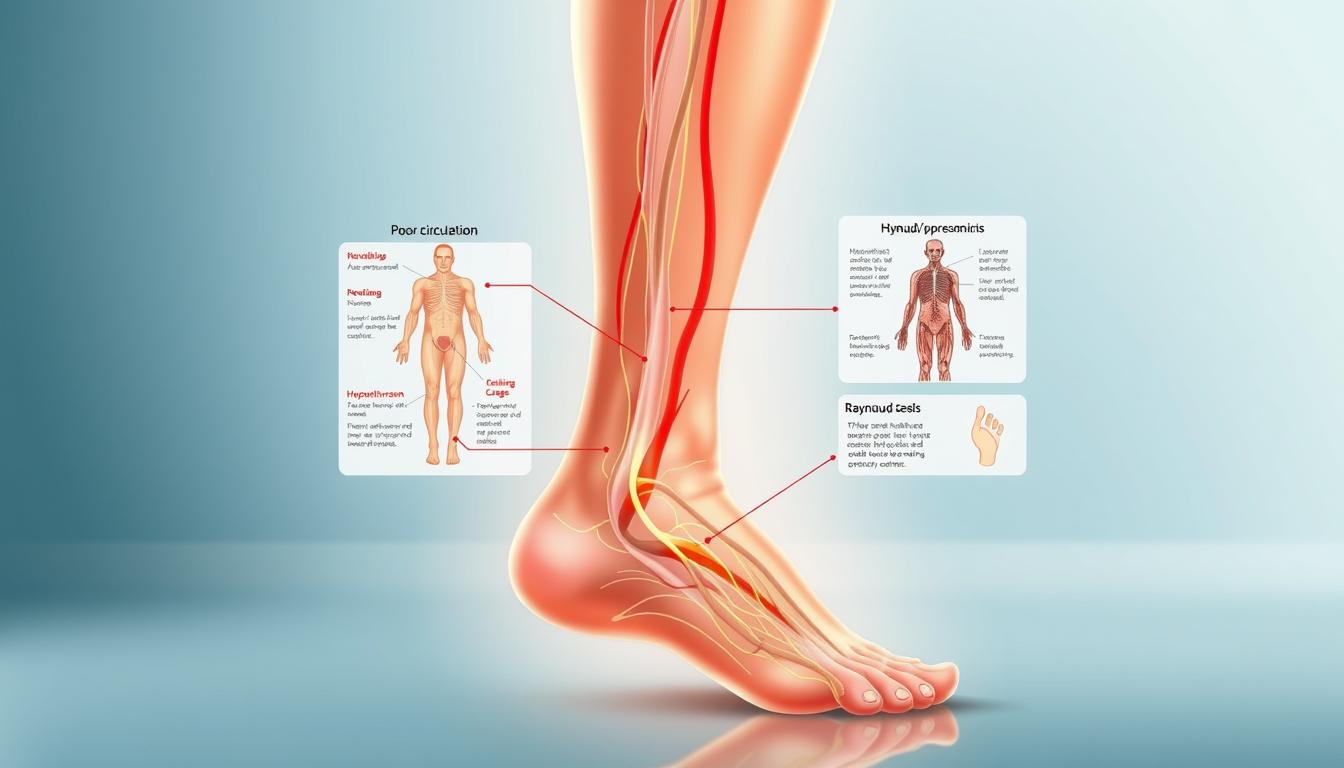
Feeling cold feet can be more than just a minor issue. It might signal a deeper health problem that needs attention.
There are many reasons why your feet might feel cold. Issues with blood flow, or circulatory conditions, can be a cause. Nerve damage is another factor that can lead to this feeling.
It’s important to find out why you’re feeling cold. This knowledge is the first step to solving the problem.
Key Takeaways
- Cold feet can be a symptom of underlying health issues.
- Circulatory conditions can cause cold feet.
- Neurological factors may also contribute to the condition.
- Identifying the root cause is essential for management.
- Understanding potential causes is the first step towards resolution.
Understanding Cold Feet: Normal vs. Concerning
Cold feet are not just about feeling chilly. They can also signal a health problem. Many things can cause cold feet, from the weather to serious health issues.
When Cold Feet Are a Normal Response
Cold feet can happen when it’s cold outside. Your body tries to save heat by cutting off blood flow to your feet. This is how your body reacts to cold.
Wearing tight or thin shoes can also make your feet cold. Wearing warmer socks or better shoes can help.
Warning Signs That Indicate a Medical Issue
If your feet stay cold even when it’s warm, it might be a health warning. Symptoms like numbness, tingling, or pain in the feet could mean a problem with blood flow or nerves. It’s important to watch for these signs.
Knowing the difference between normal cold feet and a serious issue helps you act fast. This could mean changing your lifestyle or seeing a doctor.
Circulatory Conditions That Cause Cold Feet
Circulatory conditions are key to keeping our body warm. Problems like cold feet can hint at deeper issues. If our circulatory system isn’t working right, it can cut down blood flow to our feet.
Peripheral Artery Disease (PAD)
Peripheral Artery Disease (PAD) happens when arteries narrow due to plaque buildup. This reduces blood flow to our limbs. It can cause cold feet and pain, especially when walking or resting. PAD is a big risk for heart problems, so it’s important to catch and treat it early.
Raynaud’s Disease
Raynaud’s Disease affects blood flow to our hands and feet. It causes blood vessels to narrow in response to cold or stress. This leads to discolored fingers and toes and can feel very cold. To manage Raynaud’s, we need to avoid triggers and sometimes take medication to help blood flow.
Blood Clots and Circulation Issues
Blood clots can block blood flow, causing cold feet and other symptoms. Deep Vein Thrombosis (DVT) is when a clot forms in a deep vein, usually in the legs. If it breaks loose, it can lead to a life-threatening pulmonary embolism. If you think you might have DVT or other circulation problems, seek medical help right away.
Neurological Reasons Behind Why Cold Feet May Be More Than Just Cold
Neurological factors are key in feeling cold feet. They help control body temperature and how we feel things. Damage to these nerves can cause odd feelings, like cold feet.
Peripheral Neuropathy
Peripheral neuropathy happens when nerves are damaged. It can cause numbness, pain, and cold feelings in the feet. It’s often due to diabetes, poor nutrition, or some medicines.
Diabetic Neuropathy
Diabetic neuropathy is a nerve problem linked to diabetes. High blood sugar can harm nerves, making feet feel cold, painful, or numb.
Other Nerve-Related Conditions
Other issues like nerve entrapment, poor blood flow, and some autoimmune diseases can also cause cold feet. These problems can mess with nerve function and how we feel temperature.
| Condition | Causes | Symptoms |
|---|---|---|
| Peripheral Neuropathy | Diabetes, nutritional deficiencies, certain medications | Numbness, pain, cold sensations |
| Diabetic Neuropathy | High blood sugar levels | Coldness, pain, numbness |
| Nerve Entrapment | Pressure on nerves | Pain, numbness, tingling |
Metabolic and Systemic Conditions Associated with Cold Feet
Conditions like diabetes and thyroid disorders can make your feet cold. They affect how blood flows and nerves work. This can make your feet feel cold.
Diabetes and Blood Sugar Regulation
Diabetes can harm nerves and blood flow, leading to cold feet. High blood sugar can damage nerves over time.
Thyroid Disorders
Thyroid issues, like hypothyroidism, can make your feet cold. They slow down your metabolism, reducing blood flow to your feet.
Anemia and Blood Disorders
Anemia, or low red blood cells, can cause poor circulation and cold feet. Other blood disorders can also affect circulation and cause this symptom.
| Condition | Effect on Circulation | Impact on Feet |
|---|---|---|
| Diabetes | Damages nerves and impairs circulation | Cold feet, neuropathy |
| Thyroid Disorders | Slows metabolism, reducing blood flow | Cold feet |
| Anemia | Poor circulation due to lack of red blood cells | Cold feet, fatigue |

Treatment Options and Home Remedies
Cold feet can be treated in many ways. This includes medical treatments and simple lifestyle changes.
To treat cold feet, it’s important to find the cause. This could be a circulatory problem, a nerve issue, or a metabolic disorder. The treatment will depend on the cause.
Medical Treatments for Underlying Conditions
For issues like Peripheral Artery Disease (PAD) or Raynaud’s Disease, doctors might use vasodilators. These help blood flow better. In serious cases, surgery might be needed to fix circulation. Managing diabetes is also key, as it can cause nerve damage and poor blood flow.
Lifestyle Changes That Improve Circulation
Making a few lifestyle changes can help a lot. Regular exercise, like walking or toe curls, boosts blood flow. Wearing warm clothes and staying away from cold places also helps. Plus, quitting smoking is important because it narrows blood vessels and hurts circulation.
When to See a Doctor and What to Expect
If cold feet don’t go away or come with pain, numbness, or color changes, see a doctor. They will check you thoroughly. This might include blood tests, Doppler ultrasound, or other tests to find the cause. Then, they’ll create a treatment plan just for you.
Knowing the cause and taking the right steps can help you feel better. It can also improve your blood flow and overall health.
Conclusion: Taking Cold Feet Seriously
Cold feet might seem like a small problem, but they can signal a bigger health issue. Many conditions, like circulatory, neurological, and metabolic problems, can cause cold feet. It’s important to understand the significance of cold feet to catch health problems early.
Issues like Peripheral Artery Disease (PAD), Raynaud’s Disease, and diabetic neuropathy can lead to cold feet. Spotting the warning signs and getting medical help when needed can stop things from getting worse. By focusing on the root cause, people can better their cold feet health and avoid other health problems.
Knowing the possible reasons for cold feet and seeing a doctor if symptoms don’t go away is key. This proactive approach helps keep overall health and well-being in check.